
Community News
The Gap Where Care Disappears: Why India's Pet Community Needs to Be Connected
India has never loved its animals more, yet our care system still runs on paper files, WhatsApp threads and apps that never talk to each other. When the people who heal, rescue and raise animals can't see the same record, animals fall through the gaps. Here is why connection, not just more services, is the work that actually matters.
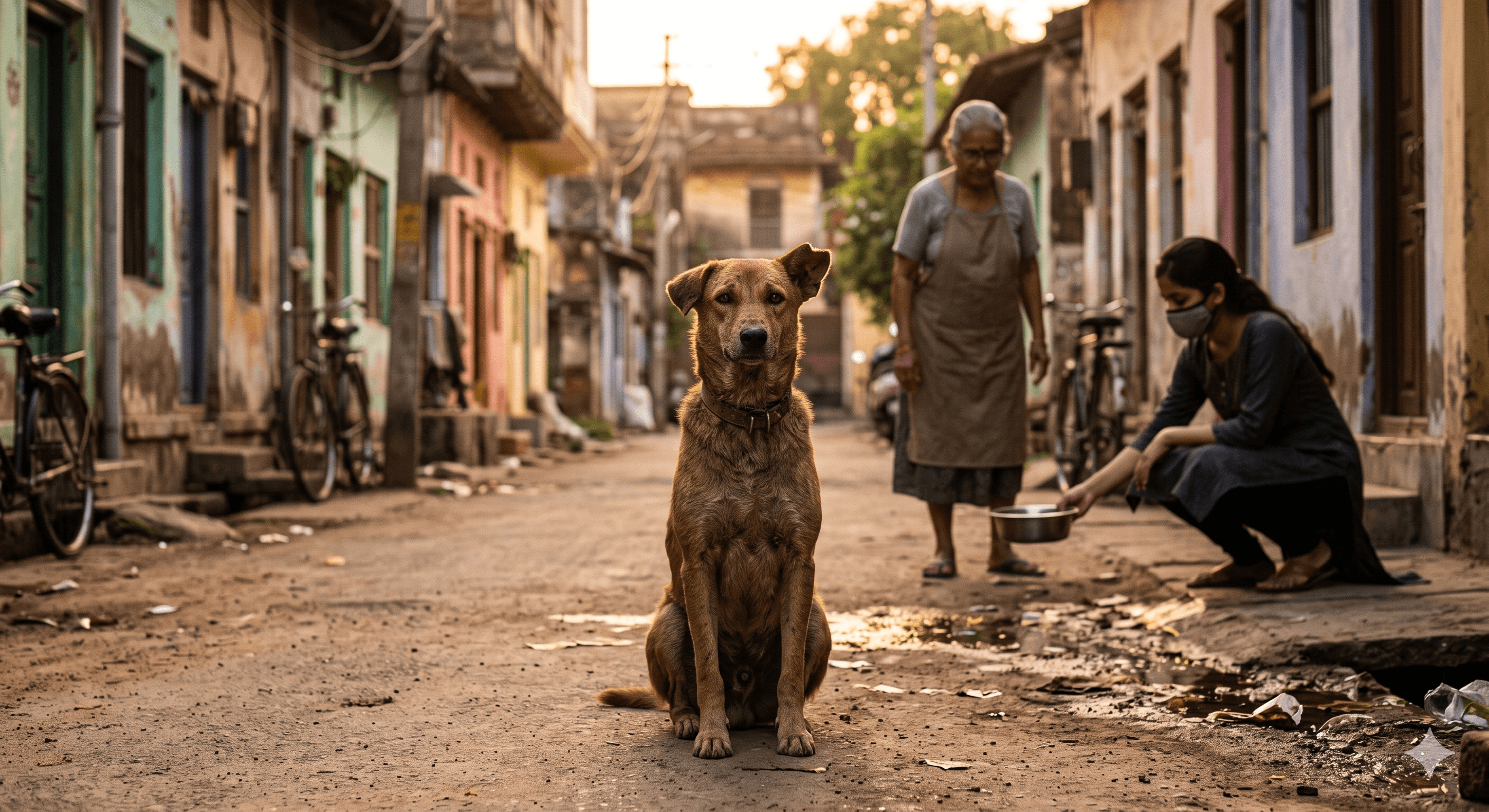
There is a moment every Indian pet parent eventually meets. It is late, your dog has stopped eating, something is clearly wrong, and you are scrolling, through a vet's WhatsApp number that may or may not still work, through a folder of paper vaccination cards, through three different apps that each do one small thing and none of which talk to each other. You are not short on love. You are not even short on services. What you are missing is something quieter and harder to name: a single place where everyone who cares for your animal can actually see the same story.
That gap is where care disappears. And in India today, more animals are living inside that gap than ever before.
A community that has never been larger
India is in the middle of one of the fastest shifts in its relationship with animals the country has ever seen. The number of pets in Indian households climbed from around 26 million in 2019 to roughly 32 million by 2024, and industry estimates expect that figure to keep rising toward 50 million by the end of the decade. Close to two million companion animals are joining Indian homes every single year. Dogs lead, cats are growing quickly, and a generation of younger, urban, first-time pet parents is treating animals not as property but as family.
Around those homes sits a second, much larger animal community that rarely makes it into the spreadsheets. Welfare bodies and global researchers estimate tens of millions of free-roaming dogs across the country, with widely cited figures putting that number near 60 million, alongside millions of street cats. One global study on pet homelessness placed India's population of homeless cats and dogs at close to 69 million. These are not separate worlds. The same street dog a family feeds every morning is the one a local NGO is trying to sterilise, the one a municipal officer is counting, and the one a single overworked vet may be asked to treat.
So much care, so little connection
Here is the part that does not get said often enough: the people inside this system are extraordinary. India's animal-care community is full of vets working punishing hours, volunteers who drive across cities at 2 a.m. for an injured pup, shelter staff who stretch tiny budgets impossibly far, and pet parents who would do anything for their animals. The problem has never been a shortage of people who care.
The problem is that they are all caring in isolation.
A veterinarian opens a case with almost no history: no record of past illnesses, no vaccination timeline, no idea what the last clinic prescribed. A rescue NGO coordinates a complex operation across WhatsApp groups, screenshots and memory, then struggles to show a donor where the money actually went. A breeder hands over a puppy with no verifiable lineage or transfer record. A pet parent fills out the same form, repeats the same history, and re-explains the same allergy at every new door. Each of these people is doing their best with a fraction of the picture.
That fragmentation is not free. It costs time, it erodes trust, and at its worst it costs lives, because the most important information about an animal almost never travels with the animal.
The missing pieces are structural, not personal
Step back, and you can see that the gaps are built into the infrastructure itself.
India has a severe and well-documented shortage of veterinarians, a shortfall of around 55,000 by national estimates, and only a minority of veterinary facilities are properly equipped to handle serious cases. Roughly three to five thousand new vets qualify each year, against a pet population growing by two million animals annually, plus the tens of millions of street animals who also depend on them. In large parts of rural and small-town India, a qualified vet is simply not reachable in time.
The welfare side carries the same structural strain. Despite decades of Animal Birth Control programmes, the country still operates fewer than a hundred accredited sterilisation centres in total, nowhere near enough to keep pace with how fast dogs breed. The downstream effects are enormous and deeply human: India records millions of dog-bite incidents every year and accounts for a disproportionate share of the world's rabies deaths, most of them preventable, many of them children. When animal data, vaccination status and field operations live in disconnected silos, public health pays the price right alongside the animals.
None of this gets solved by adding one more booking app. You cannot patch a coordination problem with another point solution. The missing piece is connective tissue: a shared, trusted record that every part of the community can plug into.
What a connected ecosystem actually means
This is the idea FluffyPet was built around, and it is simpler than it sounds. Put the animal at the centre. Give every pet, and in time every street animal, a single, persistent, permissioned record that holds health history, vaccinations, prescriptions, ownership, and the rescue or adoption journey. Then let every stakeholder connect to that record with exactly the right level of access.
A pet parent keeps one continuous timeline instead of a drawer of paper. A vet opens a case with real context instead of guesswork. A clinic, a diagnostics lab and a pharmacy work off the same source of truth. An NGO runs rescues, fosters, adoptions and donor reporting on one coordinated system instead of a dozen chat threads. A breeder can prove lineage and log a clean transfer. A municipality can finally see sterilisation coverage and outbreak signals as real data rather than rumour.
The animal stops being re-explained at every door. The story follows the animal.
That is the whole thesis. Not an everything-app for the sake of breadth, but a single connected layer beneath a community that is already doing the work, one that makes care continuous instead of fragmented, and trust verifiable instead of assumed.
Why this is the right moment
India is unusually ready for this. The same public digital rails that transformed payments and identity, like UPI, ONDC and DigiLocker, have taught hundreds of millions of people to trust citizen-facing digital services, and there are now more than 800 million smartphone users in the country. The pet-care market is expanding fast, from a few thousand crore today toward an estimated ten thousand crore by 2028, while remaining strikingly under-digitised and unstandardised. The demand is here. The technology is here. What has been missing is the connective layer, and it is being built now, while the standards of an entire category are still being written.
This is community news, so this is an invitation
We are opening this newsroom with this post on purpose. FluffyPet is not, at its heart, a piece of software. It is an attempt to close the gap that India's animal community has lived with for far too long: the gap between the people who love animals and the people trying to help them, the gap where, too often, care quietly disappears.
If you are a pet parent, a vet, a volunteer, a rescuer, a shelter, a breeder, or simply someone who stops for the brown dog with the half-torn ear on your street, this is being built for you, and increasingly with you. The animals were never the problem. The distance between us was. Let's close it.